Keys or Valves: Two Ways to Change an Instrument’s Pitch
Keys or valves change an instrument’s pitch in different ways. Learn how each mechanism shapes available notes and choose an approach that suits your playing.
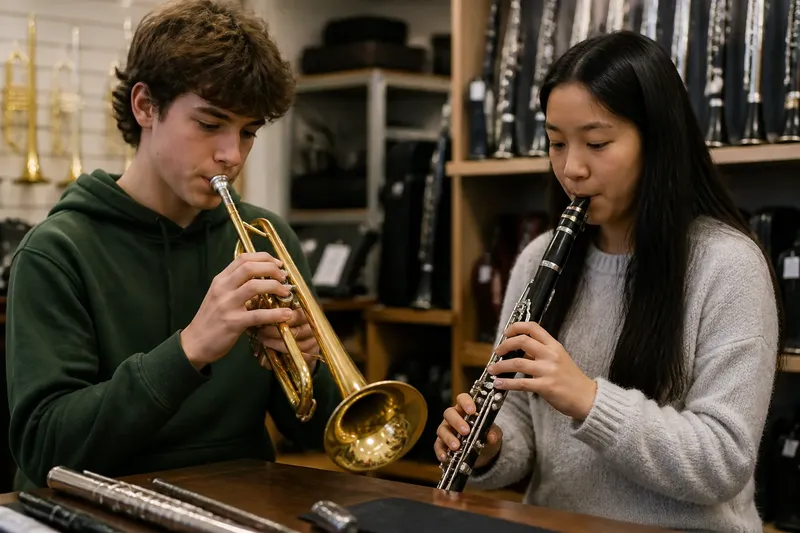
At a music shop, a beginner might press a clarinet key and hear a note jump, then watch a trumpet player lower a valve and hear the pitch shift. Keys or valves can look like simple controls, but each changes the instrument’s sound path in a different way. Knowing that difference helps you choose an instrument whose physical logic and musical possibilities suit you.
What does a key change inside an instrument?
On a woodwind such as a clarinet, flute, or saxophone, keys operate pads or open tone holes along the instrument’s body. The holes divide the vibrating air column into sections. Opening or closing them changes the effective length of that column, which changes the pitch the instrument can produce.
A player can cover some holes directly with fingertips, but keys let fingers reach holes that are too large, too far apart, or awkwardly placed. One key may open a hole while another closes one, and linked mechanisms can coordinate several pads from a single finger motion. The arrangement is not always a simple one-button-per-note system.
On a clarinet, for example, the player uses a combination of covered holes and keys to move through a scale. The instrument’s register key helps the air column vibrate in a higher register, rather than merely raising a note by a small step. On a flute, keys open tone holes while the player’s breath and embouchure—the shape of the lips and air stream—also help determine which note sounds.
Keys therefore work as part of a larger playing system. Fingerings, breath, and the instrument’s design interact. A key may make a note reachable, but producing a clear, stable tone still depends on how the player directs the air.
How do valves change pitch?
Brass instruments such as trumpets, cornets, and tubas use valves to redirect air through extra lengths of tubing. With no valves pressed, the instrument sounds notes from its basic harmonic series: a set of pitches related to the tubing’s length. Pressing a valve adds tubing to the route, lowering the available pitches.
Each valve adds a different amount of tubing. Pressing combinations gives the player additional pitch options, while the lips and air support select among the instrument’s resonant notes. A trumpet player does not get every note by pressing a separate valve; the same valve combination can serve several notes in different registers.
Rotary valves, common on some brass instruments, turn to redirect the air. Piston valves move up and down. Both approaches change the air route, though they feel different under the fingers and can suit different instrument designs and playing traditions. The mechanism is only one part of the sound: embouchure, breath, and the instrument’s shape remain central.
Where do the two mechanisms differ most?
The clearest distinction is what the player is changing. Keys alter which openings are available along a tube; valves alter the tube’s effective length by adding a section of tubing. Both systems reshape the instrument’s resonances, but they organize that work differently.
- Finger action: Woodwind keywork often involves several fingers working in coordinated patterns. Brass valve combinations can feel more compact, but the player must learn how each combination relates to notes across registers.
- Air and embouchure: Both families depend on breath control. In brass playing, lip tension and air shape are especially apparent in choosing among the instrument’s harmonic pitches. Woodwinds also rely on air and embouchure, while the key and hole pattern helps define the available notes.
- Note layout: Woodwind fingerings can differ across registers, and some transitions involve special keys or alternate fingerings. Brass players commonly reuse valve combinations for different notes, with the lips selecting the register.
- Instrument family: “Keyed” and “valved” are useful contrasts, not complete descriptions of every instrument. Some instruments combine other ways of changing pitch, and mechanisms vary among models and families.
Neither mechanism is inherently more expressive or more difficult. A player’s comfort depends on hand size, coordination, breath habits, musical aims, and the specific instrument. A compact valve pattern may feel direct to one person; another may prefer the tactile map of keys.
Which approach suits which player?
Keyed woodwinds may appeal if you like a fingering system that maps notes to a sequence of openings and closures, or if the repertoire you want to play centers on flute, clarinet, saxophone, or another keyed instrument. Consider how the instrument sits in your hands and whether the finger movements feel natural at a comfortable pace.
Valved brass may suit you if you are drawn to the trumpet, horn, trombone with valves, or a lower brass instrument, and you enjoy shaping pitch with lips and air as well as choosing valve combinations. The physical feel matters: try holding the instrument and pressing its controls, ideally with a teacher or knowledgeable player nearby.
Say you are choosing between a clarinet and a trumpet for a school ensemble. Imagine you enjoy coordinating several fingers and want to explore clarinet repertoire; the clarinet’s key system may be a natural starting point. If you would rather work on brass tone and are excited by trumpet parts, try the trumpet and see how its mouthpiece and valves feel. The useful result is not a universal verdict, but a more informed shortlist to discuss with a teacher.
How can you compare them before choosing?
Listen to short passages played by both instrument families, preferably in styles you actually enjoy. Notice the sound you want to make, but also pay attention to the physical task: finger movement, mouthpiece feel, posture, and how each instrument responds when you try it under guidance.
A few practical questions can narrow the choice:
- Which instrument’s sound keeps your attention during a full phrase?
- Do the controls feel comfortable under your fingers without straining?
- Are you more curious about woodwind or brass repertoire in your school, community group, or local lessons?
- Can you arrange a supervised trial or speak with an instructor who teaches both families?
- Does the instrument fit your available practice space and the carrying arrangements you can manage?
Instrument models differ in key layout, valve feel, weight, and maintenance needs. Follow the maker’s care guidance and ask a qualified teacher or repair technician about an instrument’s condition before committing to a used one.
What do beginners often ask about keys and valves?
Do keys and valves each produce one note?
No. Woodwind notes usually depend on combinations of open and closed holes, along with breath and embouchure. Brass valve combinations also serve multiple notes, because the player’s lips and air select different pitches within the instrument’s resonances.
Can a keyed instrument play every note?
Keywork gives a woodwind player access to a designed range of notes, but the available pitches and techniques depend on the instrument. Players may use alternate fingerings or specialized techniques for particular passages, and not every instrument has the same range.
Do valves make brass easier to learn?
Valves provide a clear set of controls, but they do not remove the need to develop a steady air stream and embouchure. A beginner’s progress depends on the instrument, instruction, practice habits, and individual comfort rather than on the control mechanism alone.
Is one mechanism better for fast passages?
Speed depends on the music, the player, and the instrument’s design. Fast woodwind passages ask for coordinated fingerwork, while fast brass passages require accurate valve changes alongside controlled air and lip response; neither mechanism wins in every situation.
What is not worth overthinking?
It is not worth choosing by assuming one mechanism is automatically easier, more versatile, or more expressive. Those labels hide the actual question: which instrument’s sound, physical feel, and musical role make you want to keep practicing?
Keys or valves offer two different ways to organize pitch, not a ranking of musical possibilities. If you are undecided, ask a teacher to help arrange a brief, supervised try on instruments from both families. Pay attention to which controls feel understandable and which sound makes you want to play another phrase; that is a more useful guide than the mechanism’s name alone.