A Walk Tuned to One Sound
A one-sound listening walk turns an ordinary route into focused music time, with a simple way to choose a sound and record what kept your attention.
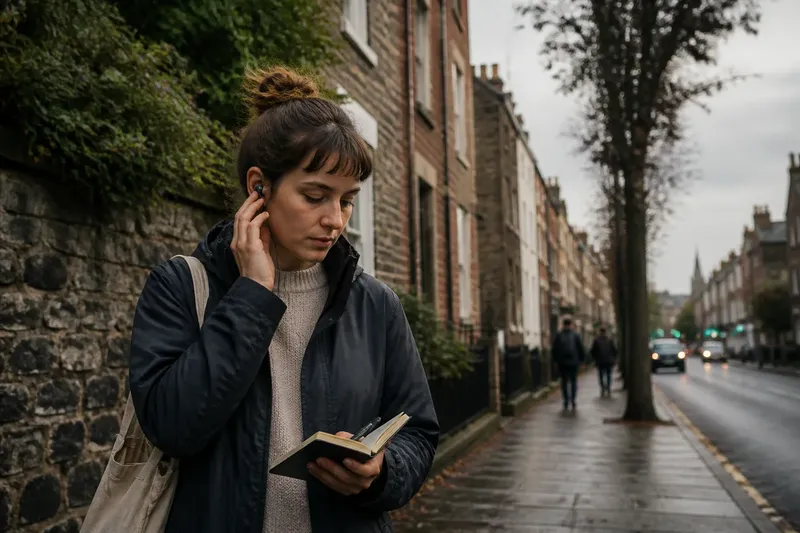
You reach the corner just as a song’s bright, repeating guitar figure changes into a softer pattern. A one-sound listening walk gives that change your attention: choose one musical sound, follow it through a piece, then jot down what held you. It costs nothing beyond a device or a song you already know, and you can adapt it to the route and listening setup you have.
Which listening setup fits your walk?
Start by choosing a setup that lets you pay attention without making the walk harder or less safe. The exercise is about following a sound, not blocking out everything around you. Keep enough awareness of traffic, people, and your route; pause the music before crossing a busy street or dealing with anything that needs your full attention.
- On a familiar, quiet route: Headphones can make a quiet layer easier to hear. Choose a route where you can move comfortably without needing to monitor complicated crossings.
- Near traffic or other people: Use a single earbud, an open listening mode, or no headphones. If the music competes with awareness of your surroundings, pause it and resume in a calmer stretch.
- Without a phone or headphones: Walk to a place where you can sit or stand safely, and listen to a song from a speaker at home before or after the walk. You can still follow the sound and make notes outdoors; the walk need not be synchronized with playback.
- With an unpredictable schedule: Pick a short piece or listen to part of a longer one. Stop when you arrive, rather than trying to complete the track while moving.
A familiar route is often easier for a first attempt because you already know where to slow down or pause. That leaves more attention for the music. But a walk is optional: the same listening task works while seated, waiting, or resting somewhere comfortable.
What sound should you choose?
Choose one sound that is easy to recognize but not so dominant that you stop hearing the rest of the piece. It might be a singer’s voice, a handclap, a repeating keyboard note, a breath between phrases, or a high instrument that appears only now and then. “Sound” can mean a part, a tone, or a small musical event; you do not need to identify the instrument correctly.
If you are unsure, play a short section and notice what catches your ear naturally. Then name the target in everyday language: “the soft ticking sound,” “the low voice,” or “the notes that answer the singer.” A plain description is useful because you can recognize it later, even without musical vocabulary.
Try to choose something with room to change. A singer may become more forceful, a percussion sound may drop out, or a sustained note may overlap with a new part. If the sound stays steady, you can follow how it relates to the music around it: what it covers, what answers it, or when it becomes easier to hear.
How do you follow one sound through a piece?
Begin with a single listen, without taking notes. Let the piece play and notice where your chosen sound first appears, whether it stays present, and what seems different by the end. You are not trying to catch every detail or build a complete account of the arrangement.
On a later listen, follow the sound in a few broad stretches: opening, middle, and ending. These are listening landmarks, not formal sections; a song may have no clear verse or chorus. Ask what changes between one stretch and the next. The sound may grow louder, move into a different register, become more rhythmic, or disappear while another part takes over.
It also helps to notice the space around the sound. Does it stand alone, sit beneath the voice, or seem to answer another instrument? Does the texture become fuller when it joins, or more open when it leaves? These questions keep attention on the selected sound while letting you hear its role in the whole piece.
Say you choose the faint bell-like notes in a song you already know. On the first pass, you hear them near the beginning and again toward the end; on the next, you notice that they stop while the singer holds a long note. A useful note might be: “The chime disappears under the held vocal, then returns in the closing phrase.” That records an audible change without guessing how the sound was made or why the musicians chose it.
How should you make notes without interrupting the walk?
Keep the record small enough that writing does not take over the activity. At a safe stopping place, type a few words in a notes app or write them on paper. If stopping is inconvenient, remember one phrase and record it when you reach your destination. Avoid trying to write while crossing streets, navigating crowded areas, or watching for obstacles.
A compact note can capture three things:
- What you followed: Name the sound in ordinary language.
- What changed: Record an entrance, exit, shift in intensity, repeated pattern, or change in relation to another part.
- What held your attention: Say what made you notice it, such as a sudden return or the way it answered the voice.
For instance: “Muted guitar; drops out after the chorus; its return made the last verse feel more spacious.” The final phrase is your impression, not a technical claim. Keeping observation and response together helps you remember both what happened and why you cared.
It is not worth the effort to identify every instrument, count every beat, or stop repeatedly to replay a few seconds. Those tasks can pull attention away from the experience. If you want to check a detail later, make a brief question mark in your note and revisit it at home.
What if your route, hearing, or attention changes?
A listening exercise should fit the day you are having. If noise makes a quiet part hard to hear, choose a more prominent sound rather than turning playback up. If headphones feel uncomfortable, use a speaker in a safe place or listen before the walk. If your attention keeps shifting, shorten the piece or follow one sound for only a section.
Some listeners may find a repeated phrase easier to track than a subtle background layer. Others may prefer a voice or a clear beat. There is no need to choose the most complicated sound. The useful target is the one you can recognize and remain curious about without straining.
If the music is unfamiliar, listen once without a target, then choose a sound for the next pass. If it is a favorite, you might select something you usually overlook. Familiarity can help you hear small changes, while a first encounter can make unexpected entrances stand out. Both situations work; choose the one that suits your mood.
What questions come up during a one-sound listening walk?
Can I follow a sound without knowing its instrument?
Yes. Describe what you hear by its quality, pitch, rhythm, or position in the mix, such as “a thin ringing note behind the voice.” The task is to notice its changes, not to name its source.
Should I listen to the whole song or only part of it?
Either can work. A full song gives you more time to notice entrances and returns, while a short section can suit a brief walk or limited attention.
What if I lose track of the sound?
Let the piece continue and pick the sound up again when you recognize it. Missing a change is not a failure; you can note what you caught rather than replaying the passage until it feels complete.
Can I do the exercise with music I have heard many times?
Yes. A familiar song can make small shifts easier to notice because you already know its broad shape. Choose a part you rarely attend to, and let your notes describe what you hear on this walk rather than what you remember from earlier listens.
How do you choose the next listening target?
After the walk, read your note and ask whether the sound itself or its relationship to another part held your attention. If you were drawn to a changing vocal, follow the backing parts next time. If the sound’s pauses mattered most, choose a rhythmic layer whose entrances shape the piece. A one-sound listening walk is most useful when it leaves you with a specific thing to notice again, not a list of details to master.
For your next one-sound listening walk, keep the same song and choose a different layer, or keep the same sound and choose a different piece. Either choice gives your ear a clear starting point. When you finish, save one sentence about the moment that stayed with you; that small record can guide what you listen for next.